
C2V May Notes From The Trenches

Welcome, friends! Well, we teased the SpaceX S-1 as topic last month (while it was still confidential), expecting that even diluted with some less-than-stellar, ill-fitting businesses, for those of us who have long been fascinated with all things outer space, it would still be more exciting than anything else. But it was unfortunately much more of a mixed bag than that.
In fact, it’s hard to imagine something being more a sign of the times than this IPO. If Worldcom was the perfect embodiment of the dotcom boom (massive overinvestment in telecom infrastructure papered over with even more massive accounting fraud), this could well become the same thing for whatever 2026 will end up being called.
Quick aside that while we’re undoubtedly shouting into the void here, we would ask that you all pretend it’s 2010 (or better yet, 1996) and people can still have nuanced perspectives that are purely analytical, you don’t have to just be all in or all out on any person, company or issue, and said perspectives do not have to be tied to an extreme political bent one way or the other (or, this might sound crazy in 2026, but here us out… no political opinion at all). We would very much appreciate it.
Back to SpaceX’s embodiment of 2026 (the good and the bad)…
Signs of the Times
On the (very) positive side, we are living in a time of truly incredible innovation – one that will likely go down as among the most transformative in human history – and this company is primarily made up of the two pillars of that transformative innovation – the space economy and generative AI:
SpaceX essentially single-handedly making the space economically viable will have an incredible impact on human innovation. Somehow, this still seems to be underdiscussed in all of this and if you think this is an overstatement, just do a quick search on the innovations that came out of the Apollo program and imagine a version of that with sustainable economics.
Generative AI will undoubtedly have its share of drawbacks and unintended consequences (what doesn’t) but in one VC’s opinion, anyway, the positives will massively outweigh the negatives.
Unfortunately, this IPO (both the business itself and the expected market reaction to the listing) also pretty well encapsulates the darker side of 2026. Notably:
A degree of hero worship and – per our plea above – a general discourse climate so extreme that the healthy scrutiny and dispassionate evaluation of just about anything simply is not longer permitted.
Business economics, upside assertions, and an associated valuation (assuming an issuance the expected $1.5 – 2 trillion range) that are comprehensively divorced from hundreds of years of financial reality and investment evaluation best practices.
(Really 2a), FOMO as an investment strategy.
A tangled web of self-dealing and personal and inner-circle enrichment loosely dressed up as something positive for the business (and by extension, its stakeholders),
Perhaps the most 2026 thing, they’re not hiding any of this. They’re not even making a real attempt to justify it -- numbers two through four are right there for everyone to see – but as long as number one applies, no one cares. There are 30 things in here that, 10 years ago, would have been absolute disqualifiers; now they’re just this week’s thing for everyone to yell at each other about online.
This is depressing, let’s get to it.
The Low-Hanging Fruit
We won’t spend much time on the revenue/valuation aspect of this, not so much because it’s been so thoroughly covered already, but because it just doesn’t matter. Why?
The Elon Premium. Tesla hasn’t grown sales in three years and seems to be entirely out of ideas, and it still trades at a 90%+ premium to every other automaker. SpaceX is a significantly cooler product that’s basically where Tesla was 10 years ago. Why even pretend you can explain the stock price with numbers? Just write “Why SpaceX Will Hit ___ This Year”, fill in whatever number you want and call it a day. No one will read past the headline anyway.
Tech valuations are so far off the rails, you can’t even see the track anymore, and as certain as we are that they’ll come back to reality at some point, we’re even more certain that this is not that point.
Does a company with $19 billion in annual revenue, $5 billion annual losses, and a steamy 34% annual growth rate remote remotely deserve a $2 trillion valuation? No. Does that mean it won’t get one? Also no.
The much less talked about “Our Market Opportunity” segment of the S-1 is pretty entertaining, but to be honest, we’re so numb to outlandish Silicon Valley hyperbole at this point that we’ll just let you enjoy the opener to that part of the S-1 and move on:
We believe we have identified the largest actionable total addressable market (“TAM”) in human history. We estimate that our quantifiable TAM is $28.5 trillion
Actually, the segment breakdown was somehow even more ridiculous than he headline number. $23.5 trillion of that TAM is xAI related. The same xAI that’s going to eat up most of the cash from this IPO, is currently running an extremely distant fifth in the foundational model race, caused the entirety of that net loss (plus a couple billion), and contributed almost nothing to the top line. But sure, $23.5 billion, here we come.
Combination of Businesses
Starlink, of course, is an organic offshoot of the original space launch business and makes sense as a compliment to that. But there is absolutely no legitimate business reason that SpaceX should own either X or xAI, nor should it own Ex-Lax, Exxon, or any other business that has nothing to do with space (with or without an “x” in its name).
Even the precious few “business synergy” cover stories that are actually defensible (xAI training on X data, orbital data centers) can be easily accomplished via generic joint venture structures, even more so when the JV partners are commonly controlled.
The fact is, xAI bought the artist formerly known as Twitter for the sole reason that it was about the be foreclosed on by its creditors and the owners of both (largely the same folks) didn’t have a better idea, and xAI was similarly jammed into SpaceX so that this very IPO could prop up a burn rate that’s roughly same as that of OpenAI and Anthropic, but with annual revenues smaller than each of those companies makes in a week. No amount of logic gymnastics can turn any of that into a sound business strategy.
Self-Dealing Part I – Pushing the Envelope
Here’s a quick summary of commercial relationships among the various subsidiary businesses, and commonly controlled companies, Tesla and The Boring Company over the past 3 years:
Goods and services obtained from Tesla:
SpaceX: $159 million
xAI: $731 million
X ads bought by Tesla $4.5 million
Office space leased by X from The Boring Company: $1.2 million
Tunnel construction contracts between SpaceX and The Boring Company: $1 million
Self-Dealing Part II – Come on, Really?
SpaceX subsidiaries have entered into $20 billion of computing equipment leases with Valor Equity Partners, whose CEO, Antonio Gracias is a sitting board member and a member of both the compensation and nominating committees
With respect to the dealings with commonly controlled companies, yes, they’re all reported to have been “arm’s length” deals, but that just covers the mechanics of the transactions (i.e., they paid market prices), not whether these deals made actually sense for SpaceX to enter into, or would have happened between two unrelated parties.
While a multibillion-dollar consumer brand (Tesla) advertising on one of the world’s largest social media platforms (X) is of course perfectly reasonable and likely to happen no matter who controls those companies, and it’s hard to tell just from these disclosures whether some of the other deals fit this criteria, one of them absolutely, unequivocally does not and it should be a huge red flag for potential investors.
If Tesla were independtly controlled, there is no chance whatsoever that SpaceX buys even one Cybertruck, never mind $131 million worth in one year. And with sales of Cybertrucks plummeting (down 45% last year) and SpaceX, out of nowhere, suddenly accounting for 20% of all sales in Q4, there’s no way to construe this as anything other than Musk using SpaceX investor money in an effort to prop up sales of another of his companies’ failing product.
This would be alarming even if it was the first such incident, but on the heals of stuffing SpaceX with the X disaster and the giant cash burden of xAI, it seems pretty clear that SpaceX is the dumping ground for any Musk empire mess that might need cleaning up. And this has real consequences for the future potential of the space part of this business.
By all accounts, SpaceX is going to raise something like $75 billion in this IPO, which would be incredible for the future of Starlink and especially the space launch business which, even with the incredible innovation of reusable boosters, is still extremely capital intensive. And it seems like that’s what most of the public thinks is happening here, but when you throw the Cursor acquisition on top of xAI’s already monumental cash burn, that money is pretty much already spent, and almost none of it has been spent on the actual business that it should be supporting.
But that’s almost academic compared to the individual self-dealing here. A $20 billion lease that isn’t even a lease (based on the terms of the arrangement, PwC, SpaceX’s auditors, refused to book it as such, insisting that it’s really a secured loan) from an entity controlled by a board member is not something that should ever be permitted to happen. The whole point of a board is to provide oversight and protect the interests of investors, but how can a board member with a $20 billion personal interest possibly be relied upon to look after the interests of anyone other than himself?
If this were anyone else’s company. none of this would fly. There is no chance that either the X or xAI acquistions would have gone through, nor would the public markets let this company IPO without divesting both of those companies first.
Again, every bit of this is a completely unnecessary stain on what is otherwise an increbidle business, and none of it should have been allowed to happen.
To wrap this up, we need to reiterate that no part of this should be construed as schadenfreude nor does our distaste for corporate malfeasance mean we daydream about 90% tax rates while listening to NPR in our Subarus. This is just our dispassionate, honest assessment of what SpaceX has presented in its pre-IPO disclosures.
We’ve been pretty vocal about how blown away we are by what SpaceX has built – the audacity to even try it in the first place, the execution to actually pull it off, and its impact in opening up an entirely new green field for innovation (also, space exploration is just downright fascinating and anything facilitates more of it is really cool in our books).
As unapologetic fanboys of the core SpaceX business, this is wildly disappointing. That such a cool company with so much potential now has to limp out of the gate carrying so much of its founders unrelated baggage is a real tragedy.
But we’re still rooting for you, SpaceX (the actual space part, that is).




We’re pleased to announce our latest, and very first space tech investment in orbital coordination infrastructure company Manifest Space, founded by SpaceX veteran Nick Orenstein. And no, we’re not nearly clever enough to have coordinated this with the intro, sometimes, um, the stars just align? (Sorry, couldn’t help ourselves).
Manifest is building a compact, self-contained transponder and optical beacon (paired with supporting data infrastructure) designed to become standard equipment on satellites and other orbital assets, providing each spacecraft with persistent identity, position, and trajectory reporting from launch through end-of-life. Essentially, the aviation transponder equivalent for spacecraft.
and surprisingly overlooked piece of technology With dense commercial constellations now launching by the hundreds per mission, adding to the already accelerating surge in orbital traffic (on top of decades worth of debris still whipping around the earth at nearly eight kilometers per second), this is an increasingly critical and surprisingly overlooked piece of technology.
The industry instead relies on a patchwork of ground- and orbit-based sensing networks plus fragmented, operator-by-operator data-sharing arrangements, with predictable results: roughly 1 in 8 satellites is lost post-deployment due to identification and communication gaps, while collision risk in low-earth orbit has already increased 7x since 2019 and is projected to climb another 35x by 2030. Furthermore, every dead or unidentifiable spacecraft only adds to the untracked debris that clutters key orbits, in an accelerating collision risk loop.
Manifest’s hardware module addresses this by embedding persistent identity and position reporting directly on each spacecraft via a GNSS receiver, secure ID, radio transmitter, and optical beacon, all in a roughly 100-gram package. Importantly, the platform is built on licensed U.S. government technology from The Aerospace Corporation that already has two years of spaceflight heritage, a meaningful de-risking element for early-stage hardware, with Manifest layering on proprietary, dual-use features and a standardized form factor designed to fit across heterogeneous fleets and operators.
This is also a particularly elegant product structure from a venture perspective. The transponder hardware itself is a viable standalone business at scale (given the urgency of the underlying problem and the inevitability of eventual standards adoption and/or regulatory mandates), but the more interesting long-term opportunity is in owning the resulting “orbital manifest” data layer that gets generated as the hardware is adopted across the industry, creating a recurring, infrastructure-style data and services revenue stream sitting on top of equipment sales.
While operating anything in space is inherently dangerous, has the space economy already come so far that there are real, substantial dirty and/or dull problems to solve? It would appear so.Website.

Chris on Startup Wind-Downs and Founder Communication
Chris shared a candid note on one of the less-discussed realities of venture: not every startup story ends with a clean exit, soft landing, or tidy headline.
When companies wind down, communication matters. The best founders are direct with their investors about what happened, what they tried, what the plan is, and what investors need for LP reporting, taxes, accounting, and closeout. Even when the outcome is painful, professionalism leaves a lasting impression.
As Chris put it, startup failure is part of the game. But reputation compounds, and how a founder handles the ending often determines who is willing to back their next beginning.

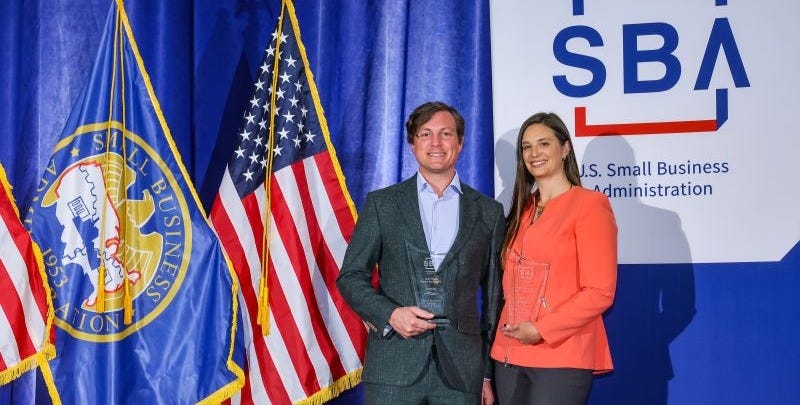
Rigorous Technology Honored by the U.S. Small Business Administration
Rigorous Technology co-founders Diane Abruzzini and Colin Riggs were named Vermont’s U.S. Small Business Administration Persons of the Year, recognizing their work supporting small and medium-sized manufacturers across the U.S.
Diane used the moment to spotlight the broader team behind Rigorous’ growth, from employees and board members to banking partners, Vermont business organizations, advisors, and early supporters, including C2 Ventures’ Chris Cunningham and Matt Olivo. As she put it, building a startup can feel isolating, but at its core, it is a team sport.
A well-deserved recognition for Diane, Colin, and the entire Rigorous team as they continue building novel robotics tools for American manufacturing.
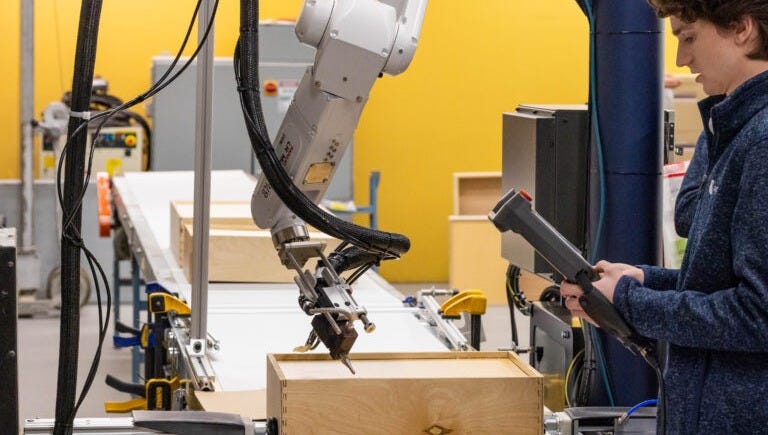
Rigorous Explores the Future of High-Mix Automation
Rigorous published a new piece on how vision systems and no-code software are making automation more practical for high-mix manufacturers.
The article highlights a core challenge for small and medium-sized manufacturers: traditional automation was built for repetition at scale, not for production environments where products change frequently, line speeds vary, and flexibility matters. Rigorous’ approach combines machine vision, pre-built robotic applications, and remote support to help manufacturers automate without constant reprogramming or major operational disruption.
A strong look at how C2V portfolio company Rigorous is helping bring flexible, usable robotics to the kinds of manufacturers that have historically been left behind by traditional automation.
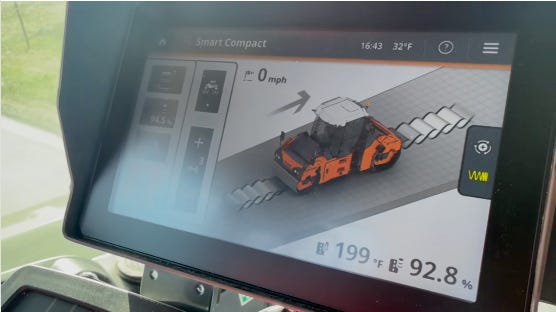
Pavewise Highlights the Future of Real-Time Asphalt Data
Pavewise CEO Bryce Wuori shared an exciting look at how real-time density data is already changing what is possible for asphalt operators.
With better access to real-time data, teams can make proactive adjustments while roads are still being built, improving quality, reducing risk, and helping infrastructure last longer. It is exactly the kind of practical innovation that can raise the bar in heavy civil construction.
A strong reminder that the future of construction technology is not abstract. In this case, it is happening directly in the field.
Gripp Named New Endorsed Partner of Farm Equipment Manufacturers Association
Gripp was introduced as the Farm Equipment Manufacturers Association’s newest endorsed partner for equipment relationship management solutions.
Led by Co-Founder and CEO Tracey Wiedmeyer, Gripp’s Rendezvoo platform helps farm equipment manufacturers strengthen dealer relationships, improve communication, and gain better visibility across their networks.
Built specifically for agriculture, Gripp understands the unique challenges of the farm equipment industry and is helping manufacturers and dealers stay better connected as they grow.
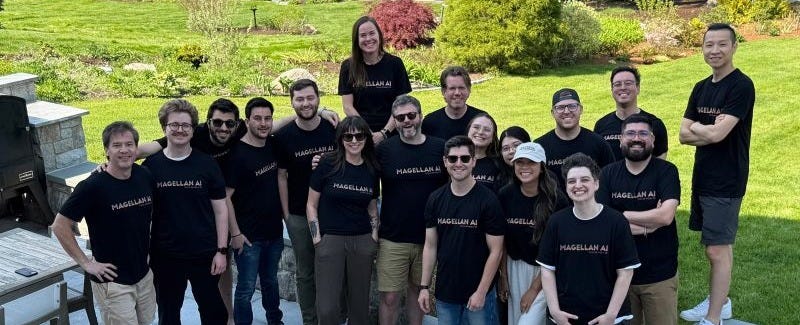
Magellan AI Wraps Spring ’26 Team Offsite
The Magellan AI team gathered at Candlewood Lake for their Spring ’26 offsite, bringing together 18 team members for a week of planning, connection, and, very on-brand, highly specific measurement.
The team logged 49,066 collective miles traveled, 20 pizzas grilled, 40 gyozas steamed, 14 games played, and enough beverages to suggest the post-offsite recovery may need its own dashboard.
A great snapshot of Magellan’s culture: analytical, collaborative, and clearly committed to measuring everything — including the pizza.
Magellan AI Talks Podcast Advertising Trends for 2026
Magellan AI Co-Founder Cameron Hendrix joined The Podcast Advertising Playbook to discuss the signals shaping podcast advertising in 2026. The conversation covered how data, attribution, and market intelligence are changing the way brands and agencies plan podcast campaigns, including the limits of genre-based buying, the role of competitive spend data, and why podcasting continues to hold strong audience attention despite being underfunded in broader media budgets.
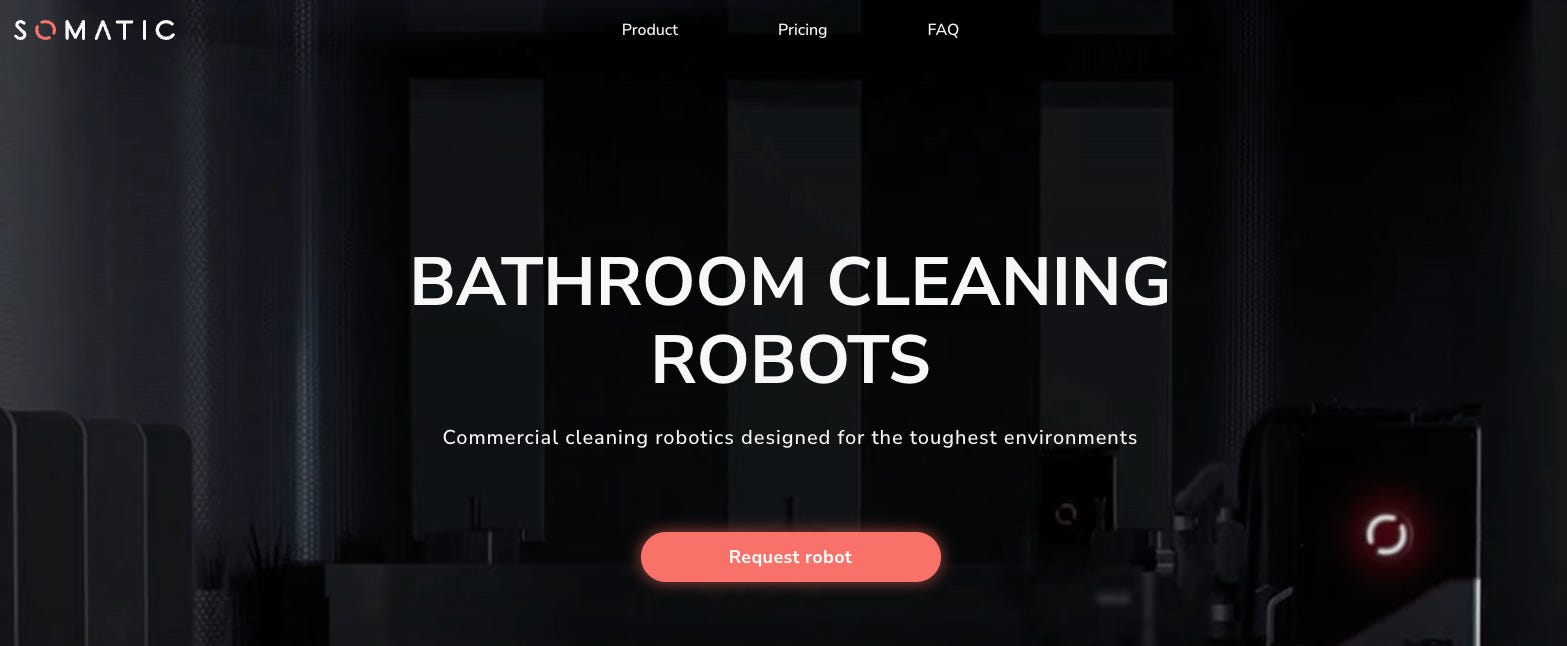
Somatic Launches Refreshed Website
Somatic has rolled out an upgraded website with a fresh new look and updated brand presence.
The refreshed site gives clearer visibility into Somatic’s work and brings a more polished, modern feel to the company’s story, product, and market positioning.
Great to see the C2V portfolio company continuing to sharpen how they show up as they build in one of the most practical corners of automation.

Avol Is Hiring an Operations Summer Intern
Avol is hiring an Operations Summer Intern to support its work building autonomous electric blended-wing aircraft for urgent medical deliveries between hospitals.
The role is based in person at the Brooklyn Navy Yard and will focus on the practical operations behind critical medical logistics, including identifying takeoff and landing locations, planning flight paths, building quoting tools, and supporting FAA Part 107 waiver writing.
A strong opportunity for someone detail-oriented, technical, and comfortable owning real-world operational work in aerospace, drone delivery, and healthcare logistics.